
Women’s Crew Neck Tops
# | Name | Features | View |
|---|---|---|---|
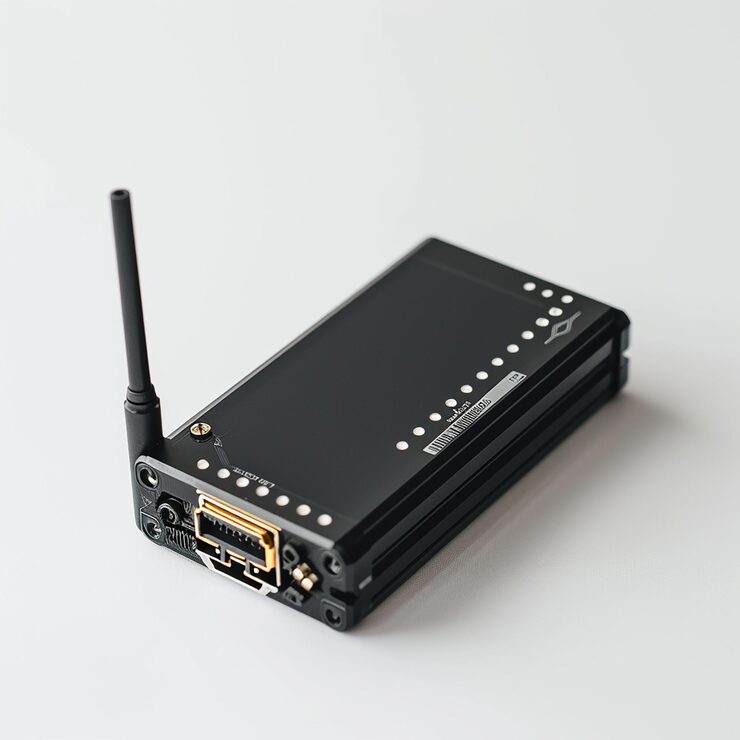
2 | Wireless HDMI Transmitter | 400m 4K Decode |
A wireless HDMI kit typically consists of two units:
- Transmitter (TX): Connects to your source device (e.g. laptop, Blu‑ray player, game console, camera) via HDMI output.
- Receiver (RX): Connects to your display device (TV, monitor, projector) via HDMI input.
The transmitter captures the audio/video signal and sends it over a wireless link (radio frequency) to the receiver, which reconstructs it and outputs it on the display. This replaces a physical HDMI cable for the “middle” connection, enabling more flexible layout and removal of cable clutter.
Wireless HDMI uses various wireless bands (often 5 GHz, sometimes dual‑band or more advanced frequencies) and proprietary or standards‑based transmission techniques. Wikipedia
Key Benefits & Applications
| Benefit | Why It Matters |
|---|---|
| Cable-free setup | Eliminates long HDMI cables through ceilings/walls, especially in home theaters, boardrooms, or classrooms |
| Flexible placement | You can move source or display (within range) without rerouting cables |
| Cleaner aesthetics | Less visible wiring behind walls or in furniture |
| Multi-display broadcasting (some models) | One transmitter can feed multiple receivers (for digital signage, conference rooms) |
Typical Use Cases:
- Home theater setups where the AV rack is hidden and you don’t want a long HDMI cable running through walls
- Connecting a PC or media player in one room to a TV/projector in another without cabling
- Conference rooms / classrooms where the presenter device changes frequently
- Digital signage or broadcasting the same content to multiple displays wirelessly
Challenges, Trade‑Offs & Limitations
While wireless HDMI is powerful, it comes with constraints. Be aware of:
- Latency / Delay
Even good wireless HDMI systems have non-zero latency (delay between source and display). For video or presentations, this may be tolerable; for interactive applications (gaming, fast motion), lag may be noticeable. Some user reviews note that fast sports or action scenes may “jump” or degrade. Reddit+1 - Line-of-Sight & Obstructions
Signals degrade through walls, floors, metal, concrete, or other obstructions. The quoted “range” is usually line-of-sight. In real homes or buildings, expect shorter effective range. - Interference & Band Congestion
Operating on shared frequency bands (e.g. 5 GHz) means potential interference from WiFi, neighbor networks, routers, etc. Use models with frequency management / adaptive switching to reduce interference. - Bandwidth & Compression
Some kits compress the video signal to fit the wireless link, which can introduce artifacts. For uncompressed paths (for highest fidelity), the link must sustain high data rates. - Power & Heat
The transmitter and receiver need power (often via DC 5V). Poor power supply or overheating may cause instability. - Cost
High-quality wireless HDMI kits, especially those with low latency, high range, or multi-receiver support, tend to be substantially more expensive than using HDMI cables.
Key Features to Compare / What to Highlight in a Listing
When choosing or listing wireless HDMI kits (for e‑commerce), focus on:
| Feature | Why It’s Important | What to Look For / What to Emphasize |
|---|---|---|
| Max Resolution & Refresh Rate | Determines image quality | 1080p @ 60Hz, 4K, etc. |
| Latency (Delay) | Affects usability, especially for interactive use | Lower is better (e.g. < 20 ms; or < 1 ms in premium systems) |
| Effective Range | How far you can place TX and RX | E.g. 30 m, 50 m, 100 ft, etc. Be clear about “line-of-sight” vs real-world |
| Multi‑receiver / multicast support | For broadcasting to multiple displays | 1 TX → multiple RX or multiple screens |
| Frequency bands / interference handling | To avoid WiFi conflicts | Dual‑band (2.4 + 5 GHz), adaptive channels, DFS, etc. |
| Ease of setup / plug & play | Simpler is better for many users | No driver, automatic pairing, minimal user settings |
| IR pass-through / control support | To control remote source devices via remote | Important for AV setups |
| Build quality & cooling | Reliability, durability | Metal housing, ventilation, antenna design |
| Warranty & support | Mitigates user risk | Especially for high-end units |
Your product descriptions should clearly state environment assumptions (e.g. “line-of-sight”, “within one room”, “avoid walls”) and use cases suitable for the kit.
Example Products & Specs (Available in Pakistan / Globally)
Here are some wireless HDMI transmitter/receiver kits you may reference or list:
- UGREEN 90909A 4K Wireless HDMI Transmitter & Receiver — Supports 4K@30Hz, dual antennas, plug & play; maximum range claimed ~50 m in open space. Available in Pakistan. Shophive+2GTStore+2
- ATEN VE849T Multicast HDMI Wireless Transmitter — Designed for multi-output broadcast; allows streaming to up to 4 receivers, up to 30 m at 1080p. Tejar.pk
- Nyrius WS54 Wireless HD Video Transmitter & Receiver — 1080p, ~60 ft (≈18‑20 m) range, IR pass-through support. Tejar.pk
- IOGEAR GWHD11 Wireless HDMI Kit — Uncompressed 1080p, <1ms latency claim, supports multiple transmitters, up to ~30 ft range. babytoys Pakistan
- UNITEK V1183A01 Wireless HDMI Kit — 1080p@60Hz, 50 m range in open space, supports up to 8 transmitters. Ugreen
⚠️ Prices, stock, and specs vary. Always verify with vendor at time of listing.
Sample E‑Commerce Listing Structure (for a Wireless HDMI Kit)
Here’s a template you can adapt for product entries:
[Product Name / Model]
Key Features / Highlights:
- Max resolution & refresh rate (e.g. 4K@30Hz or 1080p@60Hz)
- Wireless range (line-of-sight)
- Latency / delay performance
- Multi-receiver support
- IR pass-through / remote control
- Plug-and-play setup
- Build quality & cooling
- Warranty & support
Detailed Specifications:
(Include HDMI input/output, power requirements, frequencies, dimension, weight, etc.)
What’s in the Box:
List transmitter, receiver, HDMI cable(s), power cables/adapters, user manual, extension antennas, etc.
Usage Notes / Environment Tips:
- Recommended for same room / line-of-sight use
- Walls, metal, or obstacles may reduce range
- Keep away from WiFi routers or sources of interference
- For multi‑display setups, ensure support for multiple receivers
- Use quality power supply (stable 5V)
Use Cases / Scenarios:
- Home theater setups
- Projector installations
- Conference rooms / meeting halls
- Digital signage / multi-screen broadcasting
- Connecting distant rooms without running cables
Cautions & Limitations (Important):
- Not always suitable for high-response gaming
- Latency can vary — test in your setup before large scale deployment
- Performance affected by environment (walls, devices, interference)
- Power and thermal constraints
Customer Reviews / Real-World Feedback:
Insert user quotes about performance, reliability, etc.
Price / Warranty / Shipping Info / Return Policy
If you like, I can draft a complete product listing template (with comparison table, images, marketing copy) for a specific wireless HDMI kit (say the UGREEN 90909A) and optimize it for your store. Do you want me to do that?o you want me to prepare that?